
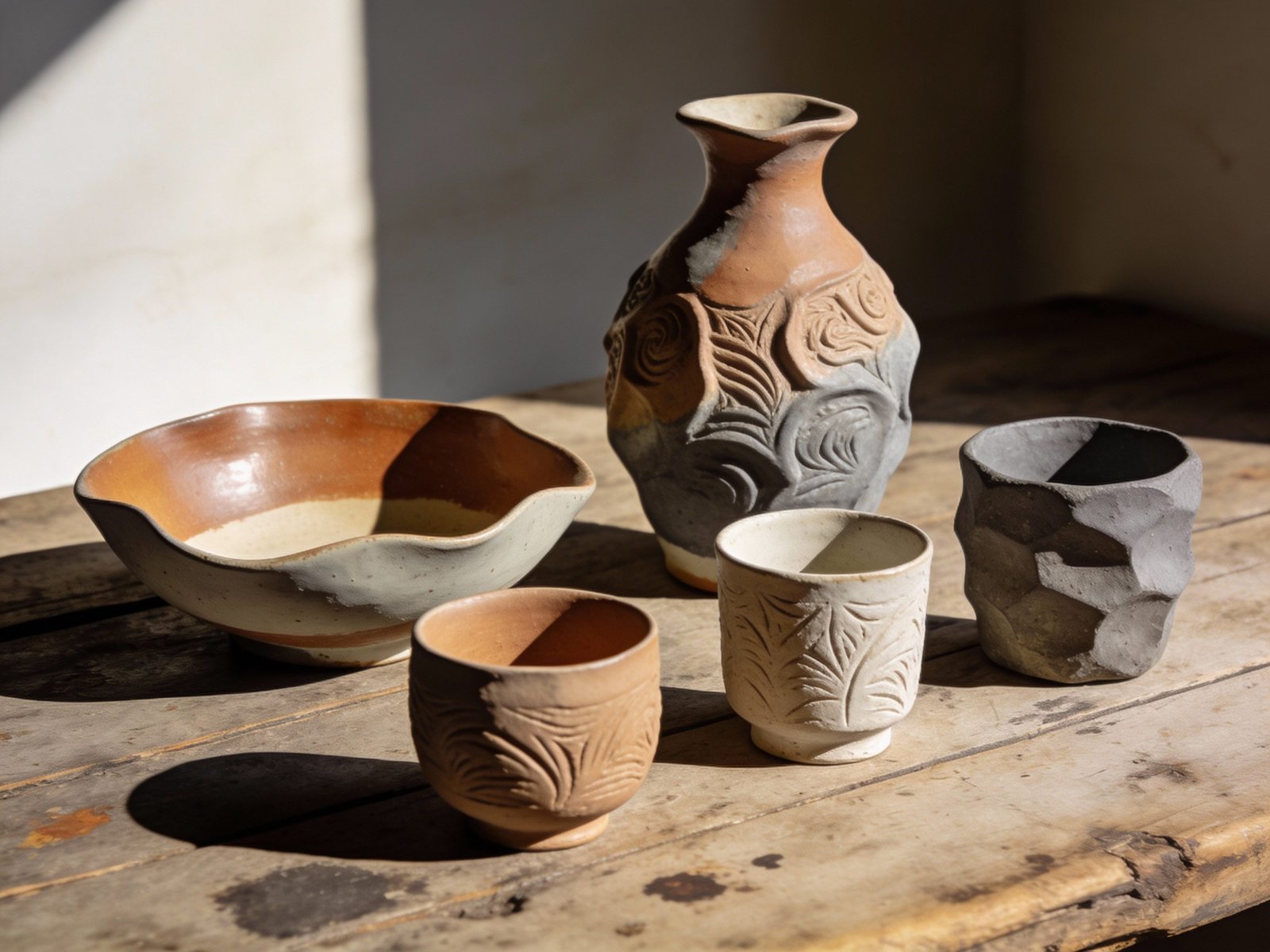
In a world obsessed with speed, symmetry, and perfection, a quieter movement is taking root—one that values slowness, irregularity, and the beauty of the imperfect. In 2025, this movement is shaping how we design, decorate, and connect with objects in our daily lives. At its heart is wabi-sabi, a timeless philosophy that has found new expression through organic, hand-carved pottery.
More than a trend, wabi-sabi pottery represents a return to human touch, emotional depth, and natural materials. Each carved line, uneven rim, and subtle glaze variation becomes part of a story—one that speaks of earth, time, and intention. This guide explores how wabi-sabi is redefining modern ceramics in 2025, why organic hand-carved pottery is in such high demand, and how makers and collectors alike are embracing its quiet power.
Understanding Wabi-Sabi in Modern Pottery

Wabi-sabi is a Japanese aesthetic philosophy rooted in simplicity, impermanence, and imperfection. It teaches us to appreciate what is incomplete, weathered, and transient. When applied to pottery, wabi-sabi encourages makers to work with the clay rather than against it.
In contrast to factory-perfect ceramics, wabi-sabi pottery celebrates:
- Asymmetry instead of uniformity
- Texture instead of polish
- Earthy tones instead of bright perfection
- Handmade marks instead of erased traces
In 2025, this philosophy resonates deeply with people who feel overwhelmed by mass production and digital life. Organic, hand-carved pottery offers something rare: presence.
Why Organic, Hand-Carved Pottery Is Rising in 2025
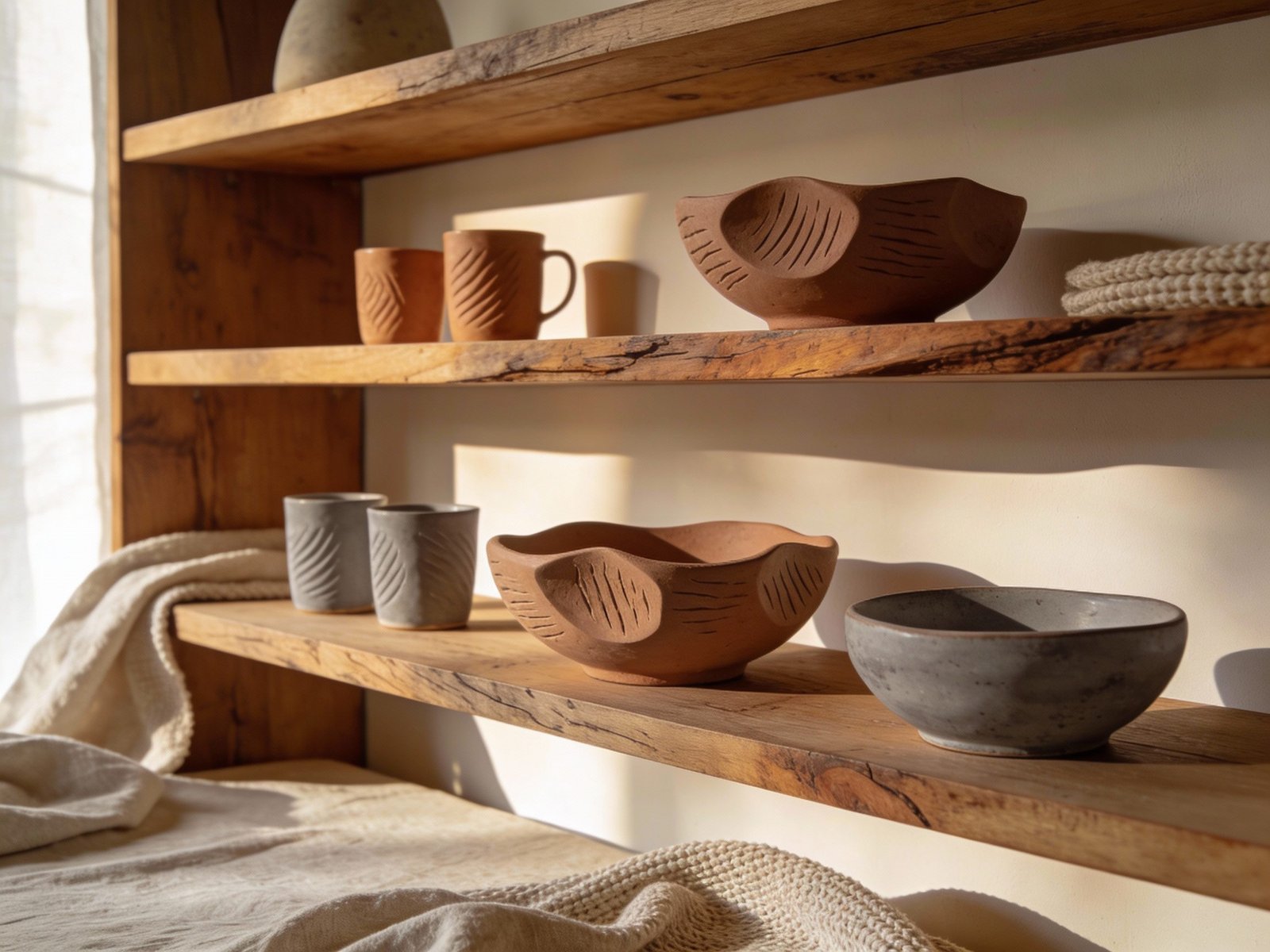
The growing popularity of organic pottery is not accidental. It reflects major shifts in lifestyle, design, and consumer values.
A Reaction to Over-Perfection
After years of smooth, minimalist interiors and machine-made objects, many people are craving warmth and authenticity. Hand-carved pottery introduces subtle chaos—gentle waves, carved grooves, and natural imperfections that feel alive.
Emotional Connection Over Visual Perfection
People are no longer buying objects just because they look good. They want pieces that feel meaningful. A hand-carved bowl carries the maker’s decisions, pauses, and instincts. This emotional layer is what sets wabi-sabi pottery apart.
Slow Living and Mindful Design
The slow living movement continues to grow in 2025. Handmade ceramics fit naturally into this lifestyle. They encourage slower meals, mindful rituals, and a deeper appreciation of everyday moments.
What Makes Pottery Truly “Organic”?
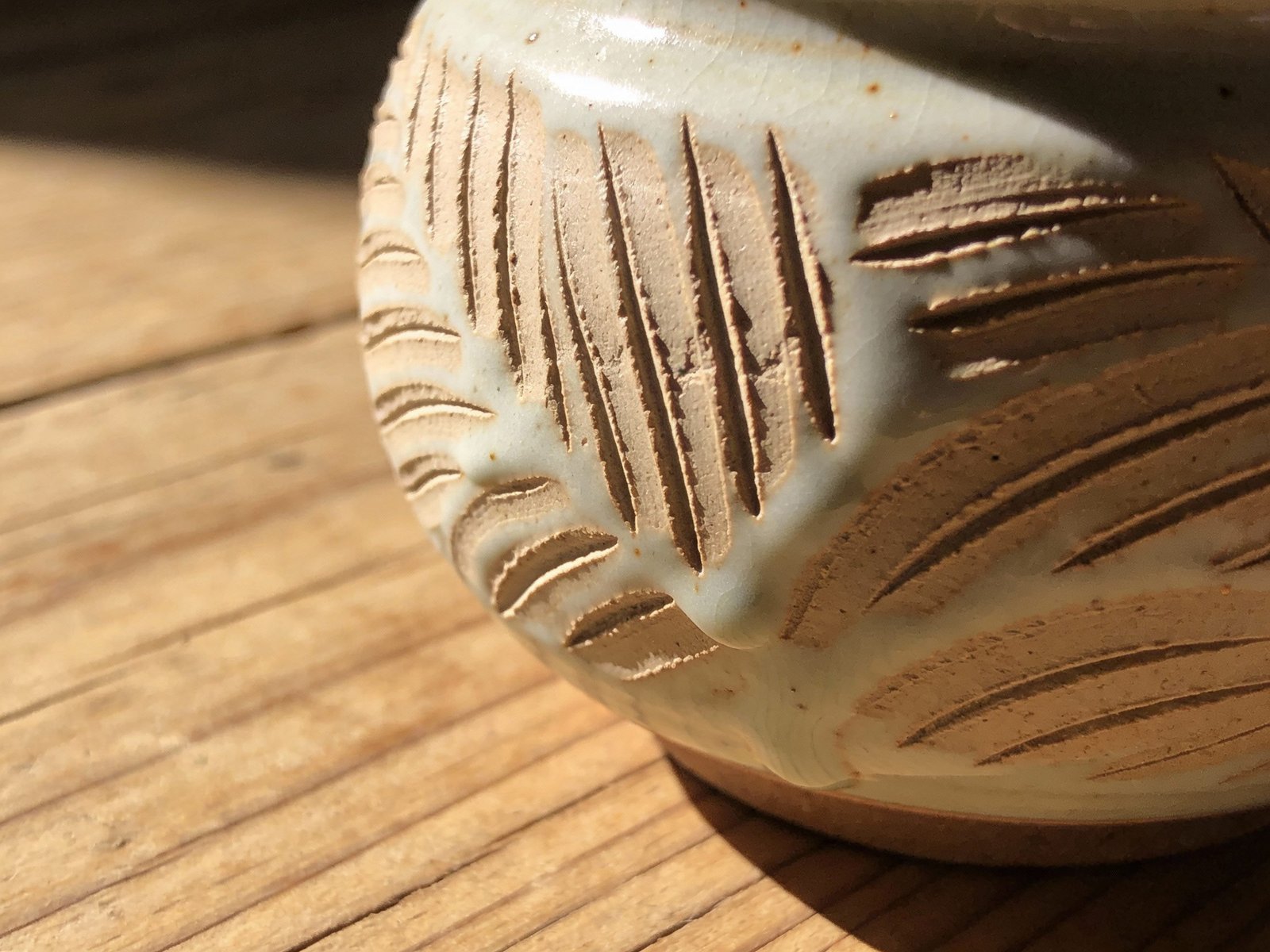
Organic pottery is not just a style—it’s an approach.
Natural Shapes
Rather than forcing symmetry, organic pottery allows forms to evolve naturally. Bowls may lean slightly. Cups may have uneven rims. These shapes feel more human and more comfortable in the hand.
Hand-Carved Surfaces
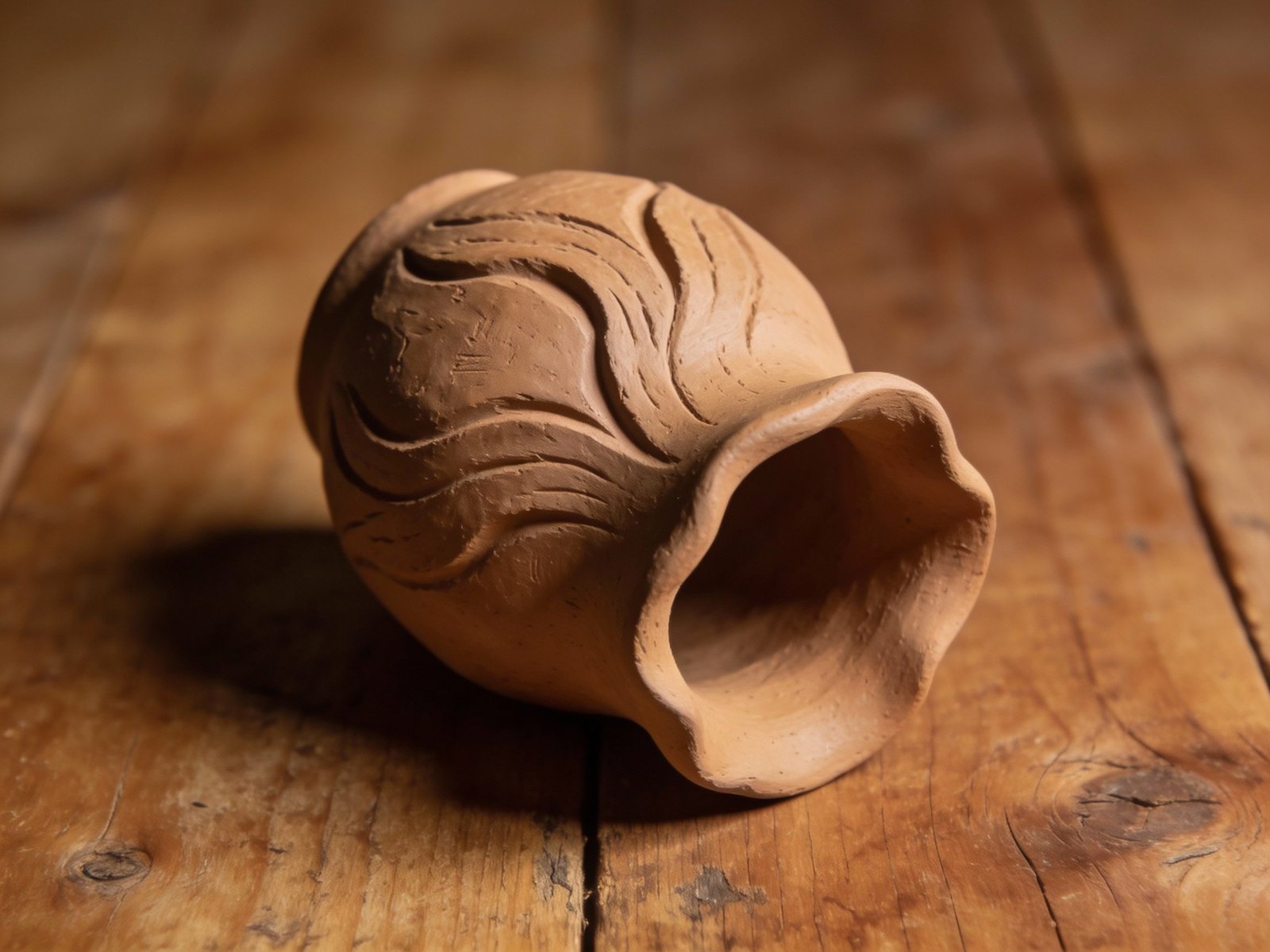
Carving is a key element of organic pottery. Instead of smooth surfaces, artists carve lines, textures, and patterns directly into the clay. These marks catch light differently, creating depth and movement.
Earth-Driven Color Palettes
In 2025, organic pottery favors muted, natural tones:
- Soft sand
- Stone gray
- Clay brown
- Ash white
- Moss green
- Charcoal black
These colors reflect landscapes rather than trends, giving pieces a timeless quality.
The Role of Imperfection in Hand-Carved Pottery
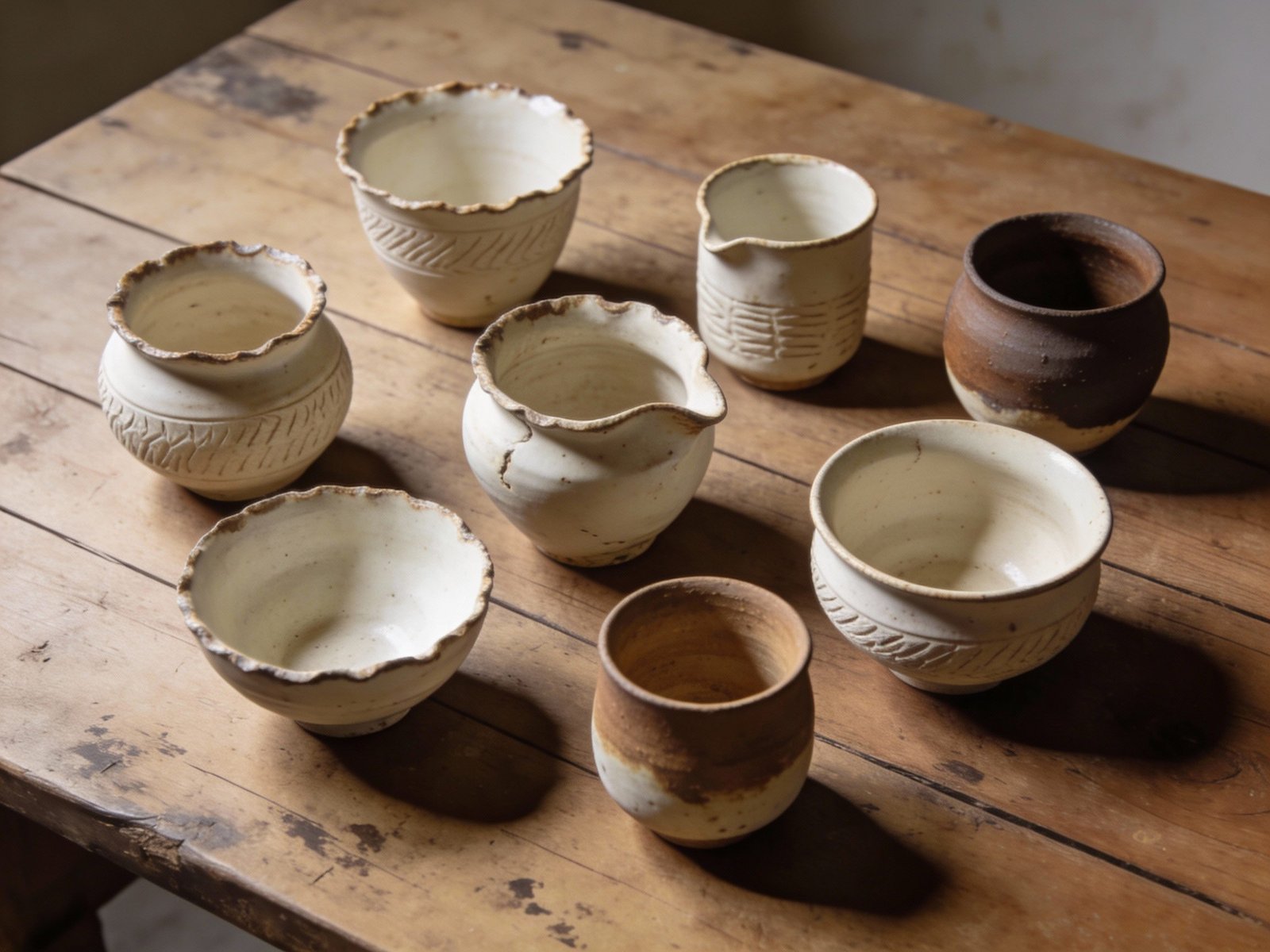
Imperfection is not a flaw in wabi-sabi—it is the goal.
A slightly cracked glaze, a visible carving mark, or an uneven foot ring tells a story of process. These details remind us that the piece was shaped by hands, not machines.
In 2025, collectors actively seek:
- Visible tool marks
- Uneven glaze flow
- Asymmetrical carving
- Natural firing variations
These elements create uniqueness. No two pieces are ever the same.
Hand-Carving Techniques Defining 2025 Pottery
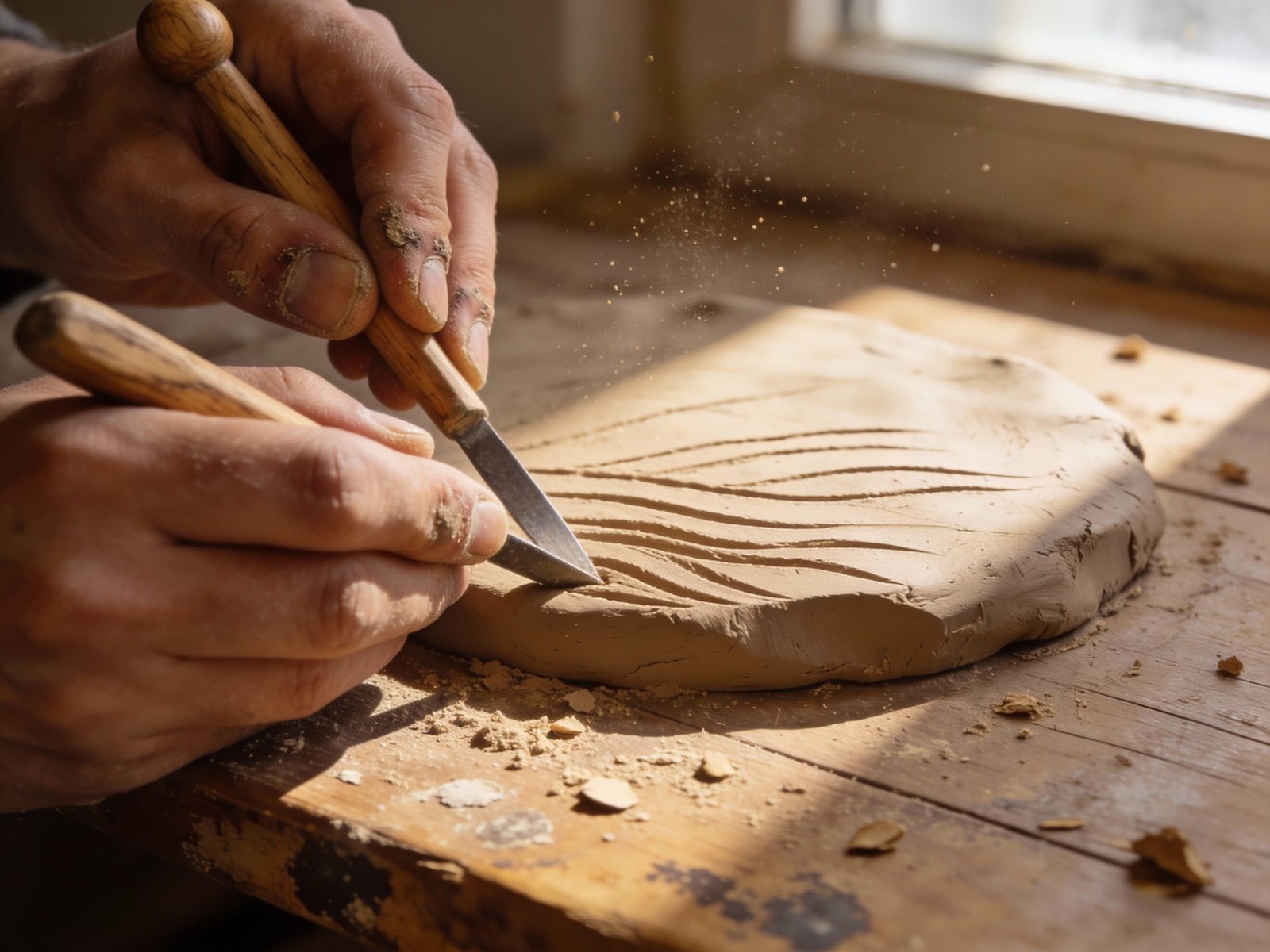
Artisans around the world are exploring carving as a primary form of expression. Some of the most popular techniques shaping 2025 include:
Linear Carving
Simple carved lines—vertical, horizontal, or spiral—add rhythm and movement. These lines guide the eye and create a calming visual flow.
Textural Grooving
Deeper grooves carved into the clay give pieces a raw, tactile quality. These textures invite touch and enhance the sensory experience.
Freeform Organic Carving
Rather than planned patterns, many artists carve intuitively, responding to the clay’s shape in the moment. This results in truly one-of-a-kind surfaces.
Minimal Symbolic Marks
Small, intentional carvings—dots, cuts, or marks—act as quiet signatures, adding character without overwhelming the form.
Wabi-Sabi Pottery in Everyday Use
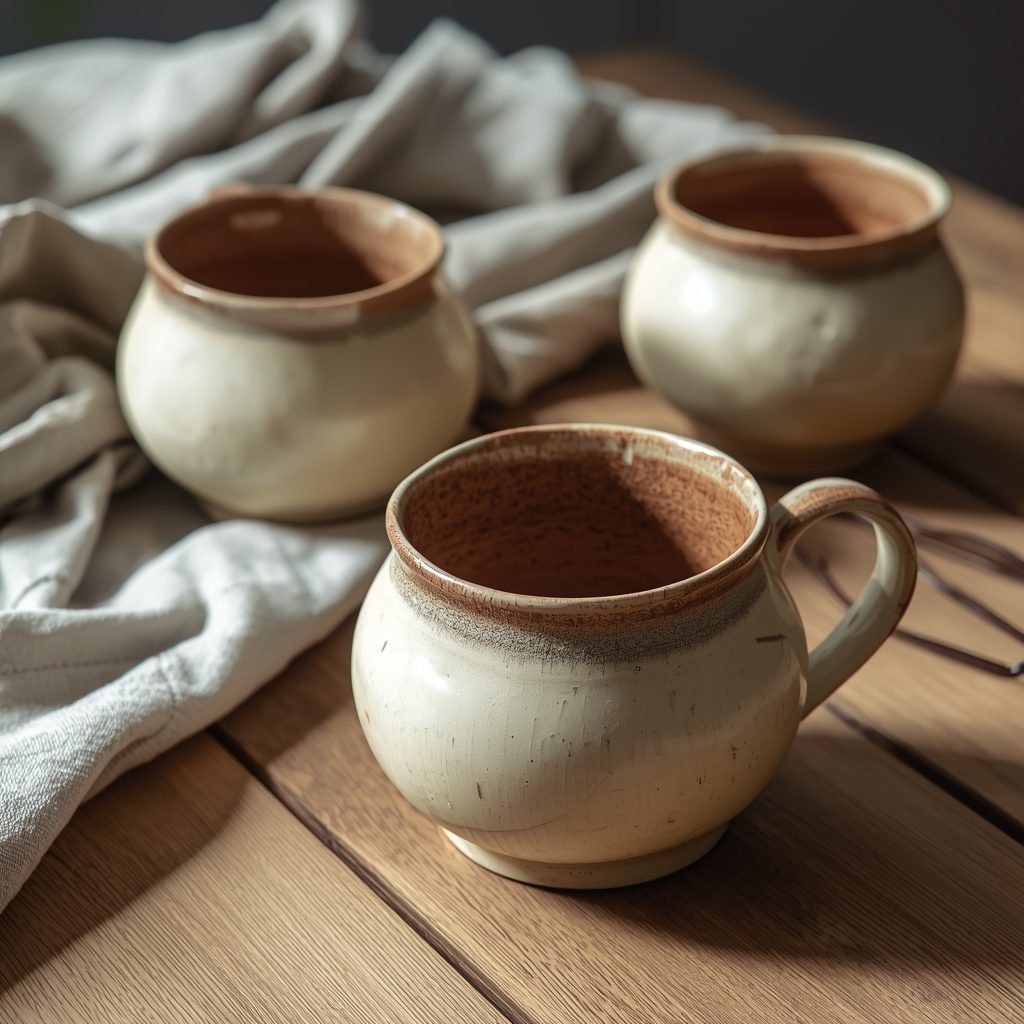
One of the most powerful aspects of organic pottery is how it transforms daily routines.
Morning Rituals
A hand-carved mug with an uneven rim makes morning coffee feel grounding and calm. The texture warms the hands and slows the moment.
Dining Experiences
Serving food in organic bowls elevates simple meals. The contrast between natural ceramics and fresh ingredients enhances presentation without trying too hard.
Decorative Presence
Even when not in use, wabi-sabi pottery adds soul to a space. A carved vase or sculptural bowl becomes a quiet focal point, never demanding attention but always adding depth.
How Designers Are Using Wabi-Sabi Ceramics in 2025
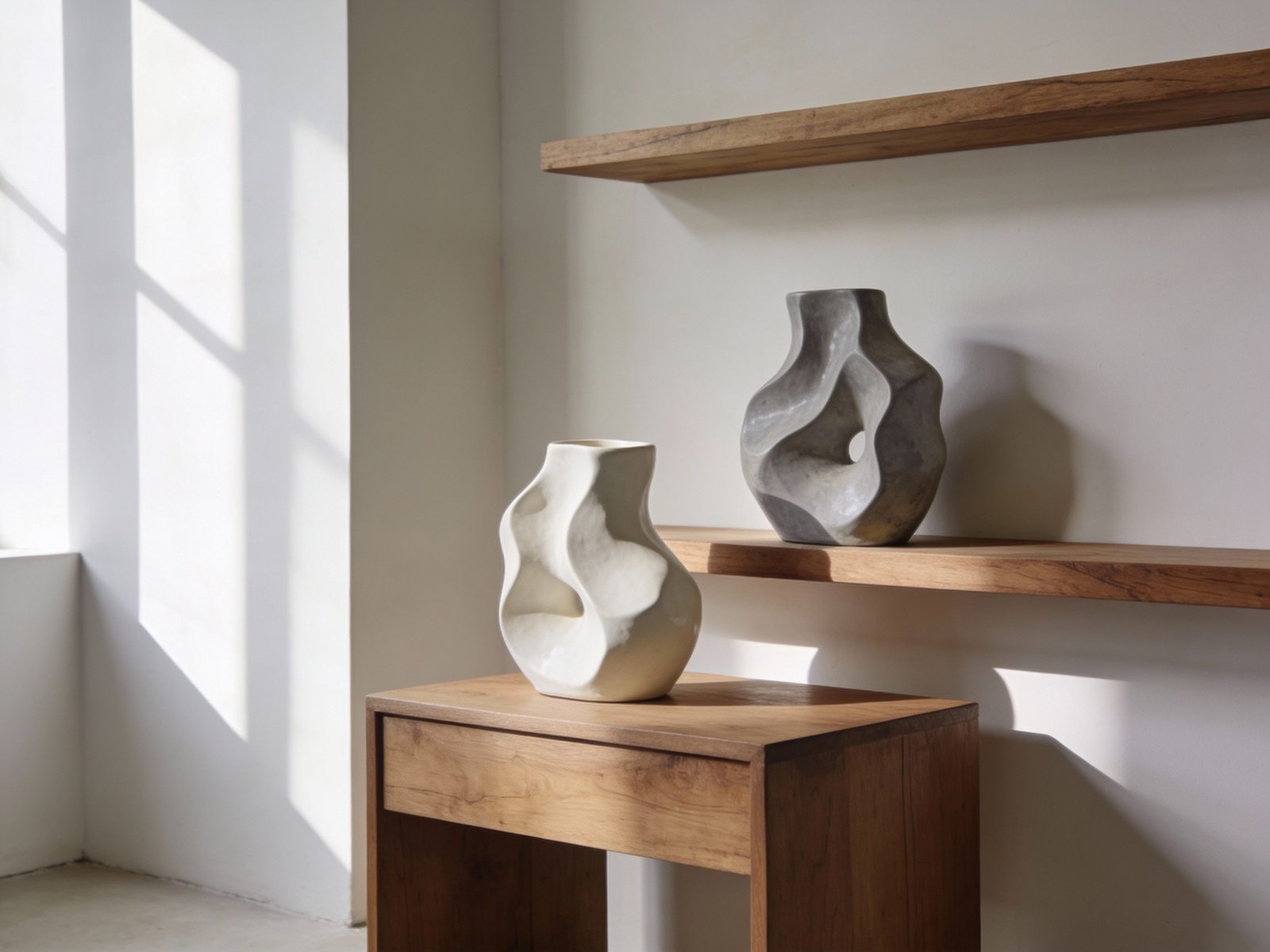
Interior designers are increasingly incorporating hand-carved pottery into modern spaces.
Minimalist Interiors
Organic ceramics soften clean lines and neutral palettes. A single hand-carved piece can break the coldness of a minimalist room.
Rustic and Natural Spaces
In wood-heavy interiors, carved ceramics enhance warmth and authenticity, blending seamlessly with natural materials.
Contemporary Luxury
Luxury in 2025 is subtle. Designers use artisanal pottery as understated statements—pieces that communicate refinement without excess.
Sustainability and Ethical Craftsmanship
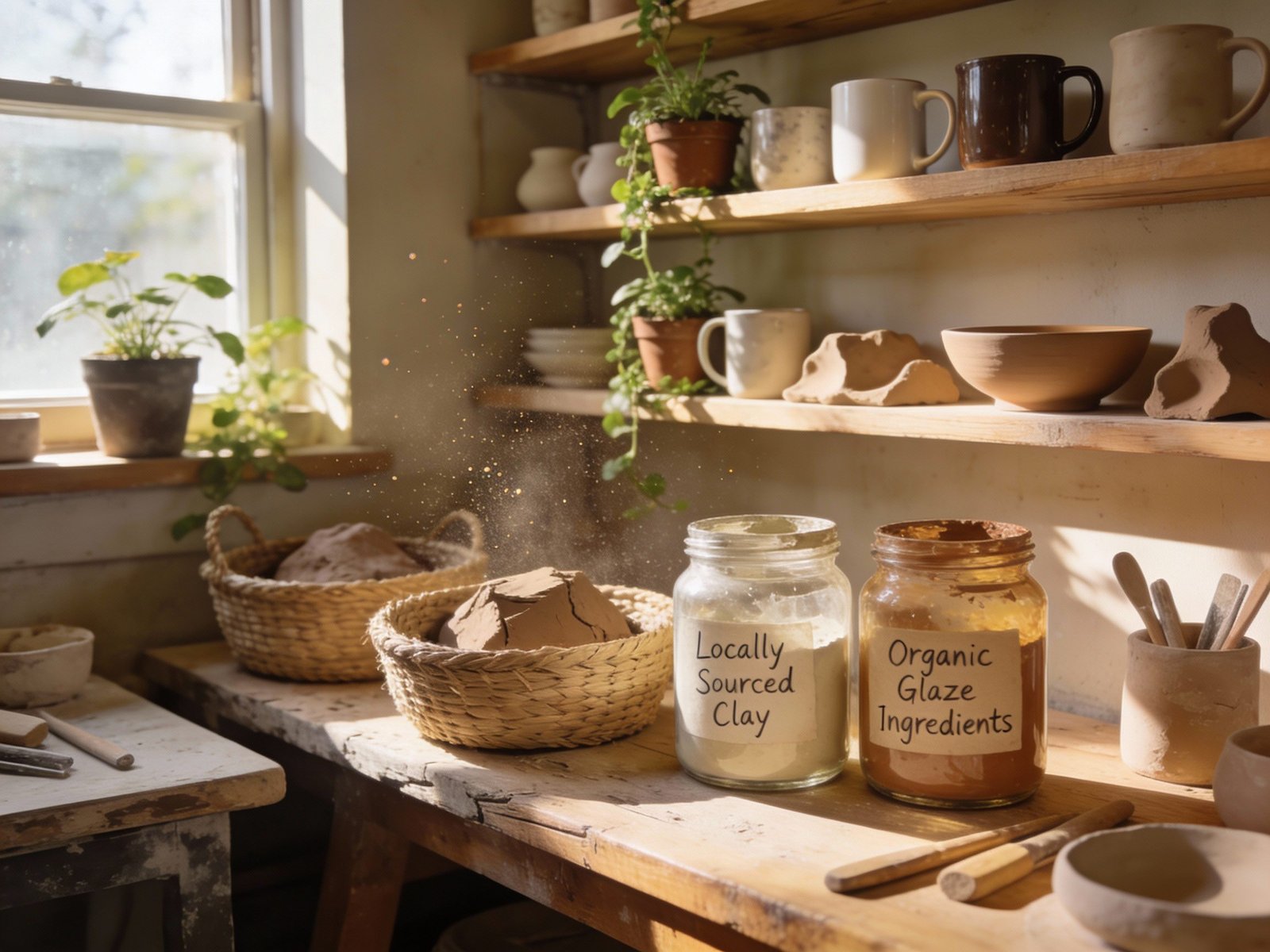
Wabi-sabi pottery aligns naturally with sustainability.
Most organic ceramic artists:
- Use local clay sources
- Work in small batches
- Minimize waste
- Avoid mass production
In 2025, buyers care deeply about how objects are made. Hand-carved pottery represents ethical consumption, where value comes from time and skill rather than scale.
Collecting Organic, Hand-Carved Pottery
Collectors today look beyond decoration. They seek connection.
What Collectors Value Most
- Evidence of handwork
- Consistent artistic voice
- Natural materials
- Honest imperfections
- Emotional presence
A collection of organic pottery often grows slowly, piece by piece, each addition chosen intentionally.
Displaying Wabi-Sabi Pieces
Less is more. Allow space around each piece. Natural light, wooden shelves, and neutral backgrounds highlight texture and form.
The Emotional Power of Hand-Carved Clay
Clay is one of the most human materials we work with. It responds instantly to touch. Every pressure, carve, and pause is recorded permanently.
This is why wabi-sabi pottery feels emotional. It carries:
- The maker’s rhythm
- The moment of creation
- The balance between control and surrender
In a fast world, these pieces remind us to slow down.
Challenges of Working in the Wabi-Sabi Style
Organic pottery is not easy.
Carving by hand requires patience and confidence. There is no hiding behind perfection. Every decision is visible.
Artists must accept:
- Irregular outcomes
- Unpredictable results
- Loss of control
But this surrender is exactly what gives wabi-sabi its power.
Why Wabi-Sabi Pottery Will Last Beyond 2025
Trends come and go—but philosophies endure.
Wabi-sabi has survived centuries because it speaks to something fundamental: our acceptance of impermanence. As long as people seek meaning, connection, and calm, organic pottery will remain relevant.
In 2025, it’s not just popular—it’s necessary.
Bringing Wabi-Sabi into Your Own Creative Practice
Whether you are a ceramic artist or a lover of handmade objects, embracing wabi-sabi starts with mindset.
Let go of perfection.
Allow mistakes.
Work slowly.
Trust your hands.
The beauty will follow.
Final Thoughts: A Return to the Human Hand
Embracing wabi-sabi is not about copying a style—it’s about changing how we see.
Organic, hand-carved pottery invites us to value the quiet, the imperfect, and the honest. It reminds us that objects can carry emotion, that beauty can be uneven, and that the human hand still matters.
In 2025, as technology accelerates, wabi-sabi ceramics slow us down.
And in that stillness, we find something rare:
presence, warmth, and soul.